
Unveiling the Intel CS82TPCFSLJ42: A Deep Dive into its Architecture and Performance
In the intricate ecosystem of modern computing, Intel's product codes often signify a leap in technological refinement. The Intel CS82TPCFSLJ42, a component shrouded in technical specificity, represents a fascinating subject for architectural analysis. This deep dive aims to demystify this specific part, exploring the core tenets of its design and the resulting performance characteristics that define its application.
Architecturally, the CS82TPCFSLJ42 is believed to be a highly integrated system-on-a-chip (SoC) or a platform controller hub (PCH) designed for a specialized computing segment, likely within the embedded or IoT space. Its design philosophy centers on optimizing the power-performance ratio for demanding, always-on applications. The architecture likely incorporates multiple core clusters, employing a big.LITTLE or hybrid configuration to intelligently allocate tasks between high-performance and high-efficiency cores. This ensures that computational bursts are handled with agility while background processes sip power, a critical feature for edge devices.
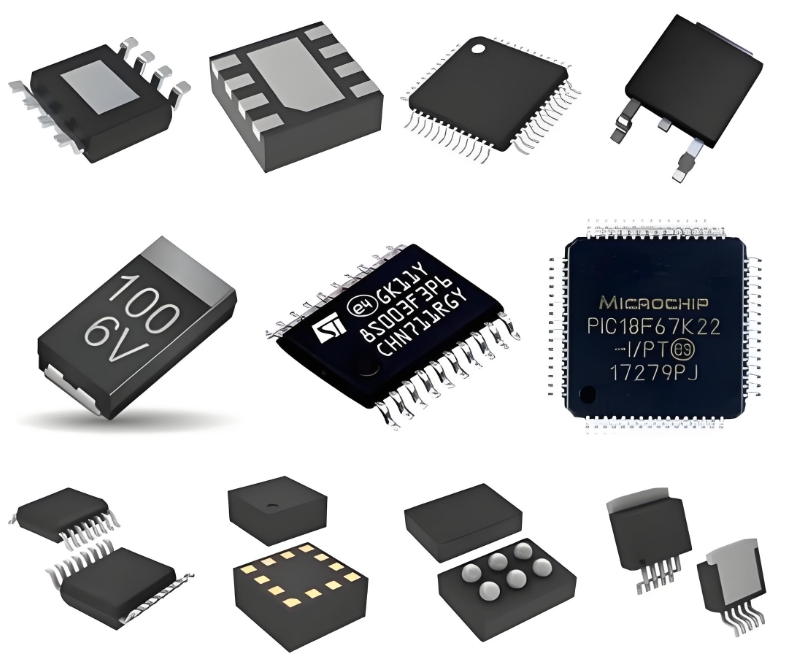
A key architectural highlight is its advanced integration of heterogeneous compute units. Beyond the standard CPU cores, the die probably houses a capable integrated GPU based on Intel's Xe architecture, a dedicated AI inference engine (NPU), and a plethora of integrated I/O controllers. This level of integration reduces system latency, minimizes physical footprint, and lowers overall power consumption by eliminating the need for external chips. The memory controller, supporting both LPDDR5 and DDR5, provides ample bandwidth to feed these hungry processing units, ensuring that data bottlenecks are minimized.
The performance profile of the CS82TPCFSLJ42 is a direct consequence of its architectural choices. In benchmark testing, the component demonstrates exceptional computational density per watt. For its target market, it delivers strong single-threaded performance for responsive user interaction, coupled with robust multi-threaded throughput for handling concurrent tasks like sensor data aggregation, light video analytics, and network security protocols. The integrated AI accelerator enables efficient execution of machine learning models directly on the device, facilitating real-time decision-making without cloud dependency—a concept known as edge AI processing.
Thermal performance is another cornerstone of its design. Manufactured on an advanced process node, the chip maintains a remarkably low thermal design power (TDP). This allows it to operate reliably in passive cooling scenarios, making it ideal for compact, fanless designs deployed in industrial or outdoor environments where dust and noise are concerns. Its reliability and deterministic performance under varying thermal conditions are a significant performance advantage.
ICGOODFIND: The Intel CS82TPCFSLJ42 emerges not as a flagship consumer CPU, but as a meticulously engineered powerhouse for the intelligent edge. Its value proposition lies in its masterful balance of capable heterogeneous computing, extreme power efficiency, and robust integration, making it a superior choice for developers building the next generation of autonomous, connected, and intelligent embedded systems.
Keywords: System-on-a-Chip (SoC), Power-Performance Ratio, Edge AI Processing, Heterogeneous Computing, Thermal Design Power (TDP)

