
Ningbo Dianbo Weixun Communication Technology has announced that its self‑developed GlassRadio™ platform has achieved a major milestone: the dBT5321A, the world's first glass‑substrate RF chip, has entered mass production. Targeting wireless video transmission and remote industrial monitoring, the RF module measures just 2mm × 2mm × 0.55mm – only 45% of the area and 75% of the thickness of comparable overseas products.
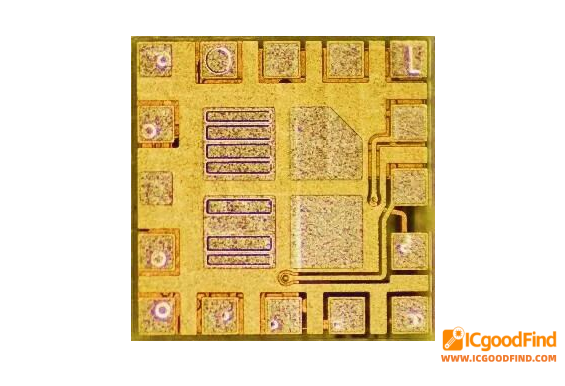
The module eliminates discrete SMD passive components, removing supply chain risks tied to MLCC capacity and price volatility. Built on the GlassRadio™ full‑stack technology, it integrates a power amplifier, low‑noise amplifier, RF switch, and SAW filter using multi‑layer RDL interconnect and high‑density TGV arrays.
Compared with traditional resin substrates, the glass substrate offers roughly an order of magnitude lower dielectric loss and better CTE matching with the chip – improving high‑frequency signal attenuation and thermal reliability. Dianbo Weixun has filed 26 core invention patents, including 6 PCT international patents covering the US, Europe, Japan, Korea, and India, with proprietary TGV and 3D spiral inductor processes.
The company recently completed a new funding round led by Wuhan Haoyuan (the direct investment platform of DR Laser) with participation from Wuhan Planck Ventures. DR Laser's TGV laser micro‑via equipment supports wafer‑ and panel‑level packaging, and will provide equipment support for Dianbo Weixun's next‑gen ultra‑thin glass‑based RF modules. Planck Ventures' participation, combined with Dianbo Weixun's optical communication patents, signals early positioning in optical communications.
ICgoodFind Takeaway:
Glass‑based RF chips are now in mass production – a real‑world proof point for TGV commercialization. With equipment and capital partners aligned, the glass substrate ecosystem is accelerating toward broader advanced packaging adoption.
